Hermeneutic Possibilities of the Contemporary Urdu Novel: In Search of a New Critical Paradigm
معاصر اردو ناول کے تعبیری امکانات: نئے تنقیدی پیراڈائم کی جستجو
DOI:
https://doi.org/10.52015/daryaft.v18i01.445Keywords:
Novel, Criticism, Interpretation, Hermeneutics, Ambiguity, Multiplicity of MeaningAbstract
This paper examines the interpretive possibilities of the contemporary Urdu novel and argues for the formulation of a renewed critical paradigm grounded in text-centered hermeneutics. While Urdu novel criticism has historically remained confined either to evaluative judgments or to sociological and ideological documentation, the evolving complexity of contemporary fiction demands a more rigorous interpretive framework. Drawing upon hermeneutics, narratology, and post-structural insights, the study critiques reductionist and context-dominated approaches and proposes a balanced methodology that foregrounds the novel as an autonomous yet contextually resonant structure of meaning. The article contends that the contemporary Urdu novel, shaped by layered realities, ideological tensions, and aesthetic experimentation, requires a blended theoretical engagement that neither marginalizes the text nor absolutizes external frameworks. By revisiting critical traditions and identifying their limitations, the study proposes a flexible, multi-perspectival interpretive model capable of addressing formal, thematic, and epistemic complexities of the modern Urdu novel in discourse studies.
Conflict of Interest: The author declares that there are no conflicts of interest related to the research, authorship, and/or publication of this article, and that the data presented have not been fabricated or falsified.
Funding: This research did not receive any specific grant or financial support from public, commercial, or not-for profit funding agencies.
Participant Consent: The author confirms that Informed consent was obtained from all participants, and confidentiality was duly maintained.
Downloads
Author Biography
-
DR. MUHAMMAD RASHID SAEEDI, Lecturer, Department of Urdu and Iqbaliat, The Islamia University of Bahawalpur, Pakistan
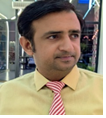
Dr. Muhammad Rashid Saeedi is a Lecturer in the Department of Urdu and Iqbaliat at The Islamia University of Bahawalpur. He earned his PhD from the same institution and specializes in Urdu Fiction and Urdu Criticism. Dr. Saeedi has made significant contributions to Urdu literary scholarship, with eighteen published research articles and one book to his credit.